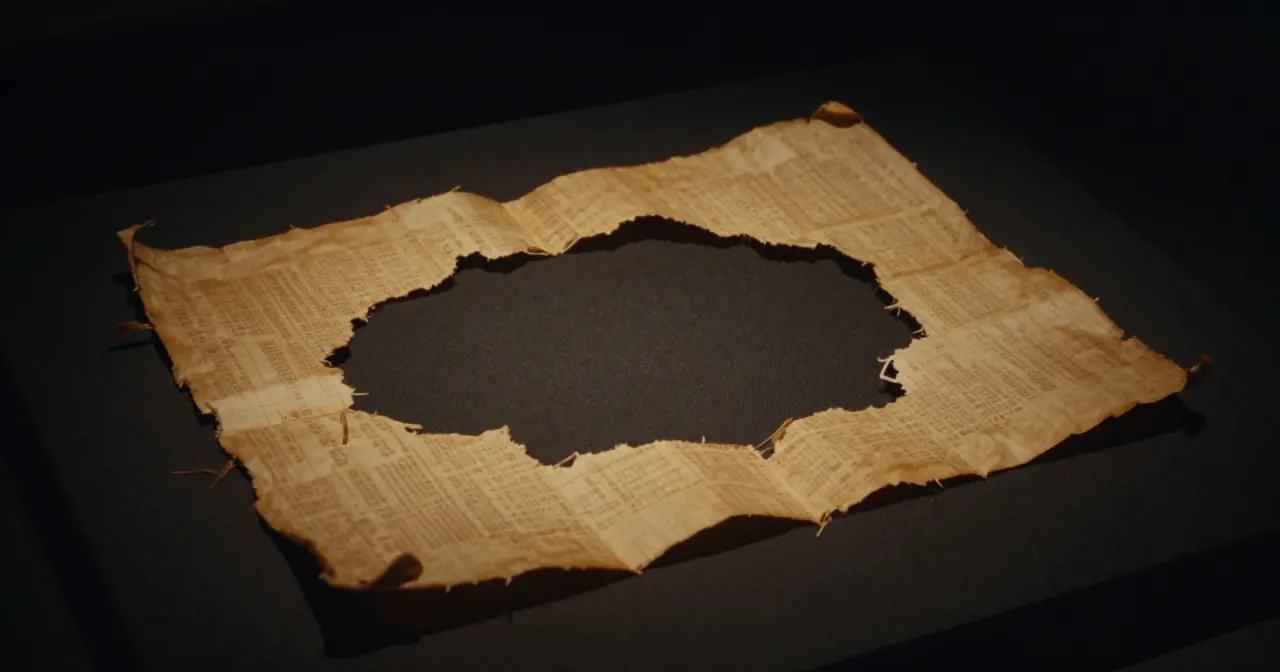
The Gospel of Mary opens mid-sentence, on page seven. Six pages are gone before we arrive.
Jesus has just left, and the disciples are in tears. They are afraid that if they preach, they will end up as he did. Then Mary stands up and comforts them, and Peter says what the men in the room are thinking: the Savior loved you more than other women, so tell us what he told you that we have not heard.
She starts to tell them. Then four more pages are missing.
What survives
When the text picks up again, Mary is describing a vision of the soul climbing past hostile powers on its way home, answering each one. It is a strange and beautiful passage, and we have only the end of it.
The argument comes next. Andrew says these teachings are strange, and Peter asks whether Jesus would really have spoken privately with a woman and not openly to them. Mary weeps. Then Levi answers Peter, in one of the great lines in the literature: if the Savior made her worthy, who are you to reject her?
They go out to preach, and the manuscript ends.
How it was found
In 1896 a German scholar named Carl Reinhardt bought a papyrus book in Cairo. It took until 1955 to be published, delayed by two world wars and, in one telling, a burst water pipe at the printer. Two small Greek fragments from the third century turned up separately, which shows the book had readers in more than one language.
How close it came to the Bible
Here is where this page differs from most. It did not come close.
The Gospel of Mary appears on no early list of accepted books. It seems to have been a minority text, read by people with particular ideas about authority and inner vision. Saying the church “cut” it gives it a candidacy it never had. A truer description is that it records an argument the church was having, and shows us a side we otherwise hear only secondhand.
That argument is real. Paul names women as coworkers. All four canonical gospels put Mary Magdalene first at the empty tomb. And in 591 a sermon by Pope Gregory the Great merged her with an unnamed sinful woman, and the penitent prostitute of Western art was born. That identification has no basis in the gospels. The Catholic Church has since made her feast day equal to those of the apostles.
Where to start
The whole surviving text takes about fifteen minutes to read. Read it, then read Karen King’s study, which explains what those missing pages may have contained.
For where to go next, see the best books on the lost gospels.
Common questions
Is the Gospel of Mary in the Bible?
No, and it never came close. It does not appear on any known early list of accepted books. It survived in one damaged Coptic copy and two small Greek fragments.
Which Mary is the Gospel of Mary about?
The text says only Mary. Most scholars identify her as Mary Magdalene, because of her role in the resurrection accounts and her prominence in other early texts.
How much of the Gospel of Mary survives?
Less than half. The Berlin Codex copy was nineteen pages long, and pages 1-6 and 11-14 are missing. The start of the book and the middle of her teaching are gone.
Does the Gospel of Mary say she was married to Jesus?
No. It says the Savior loved her more than other women, and that he knew her completely. Marriage comes from modern speculation.