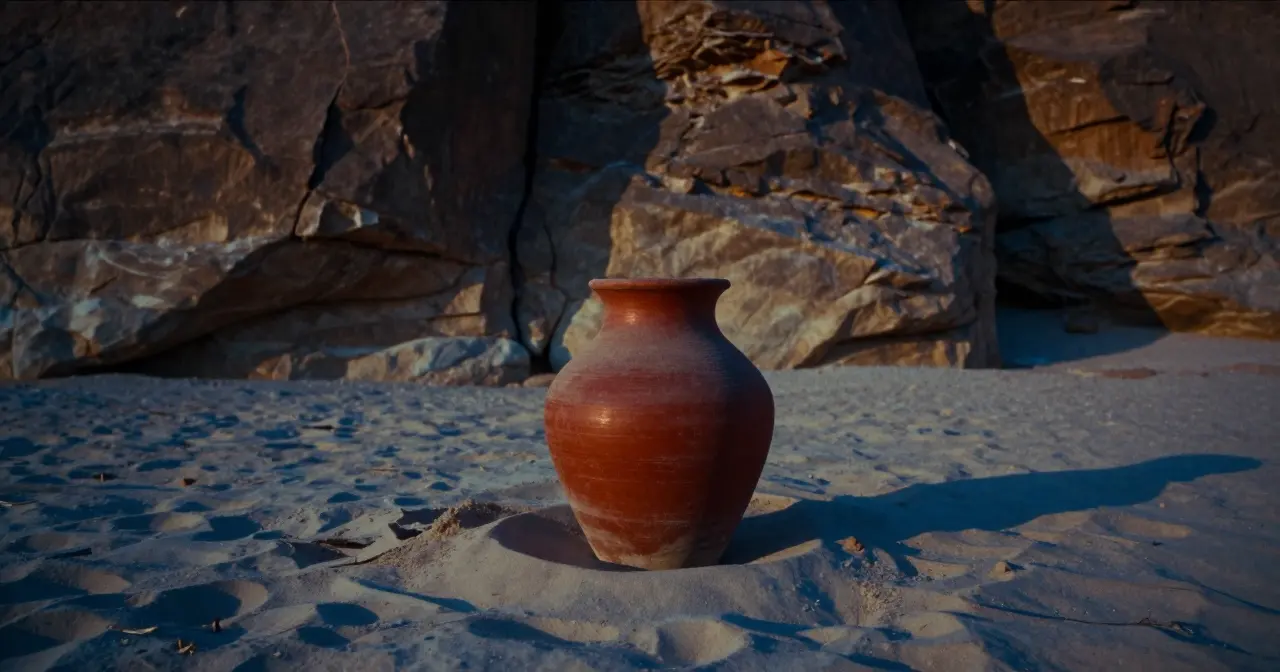
Before 1945, almost everything we knew about the losing side of early Christianity came from the people who beat them. Then a farmer near Nag Hammadi in Upper Egypt, digging for fertilizer at the foot of a cliff, hit a sealed jar.
Inside were thirteen books bound in leather, about sixteen hundred years old. For the first time, the people the church fathers had condemned could speak for themselves.
What was in the jar
About fifty texts in Coptic, translated from Greek. Some were known only as titles in lists of heresies, some were not known at all.
- The Gospel of Thomas: 114 sayings of Jesus. See our guide.
- The Gospel of Philip: meditations on sacraments, with the much-misquoted passage about Mary Magdalene.
- The Gospel of Truth: possibly by Valentinus, a teacher who, by one ancient report, nearly became bishop of Rome.
- The Apocryphon of John: a full account of creation in which the God of Genesis is a lesser and ignorant being.
- The Thunder, Perfect Mind: a poem in a woman’s voice, full of paradox, unlike anything else from antiquity.
- A piece of Plato’s Republic: badly translated, and a reminder of who these readers were.
What the story gets wrong
The version you may have heard includes a farmer afraid a jinn is in the jar, a mother feeding pages to the oven, and a blood feud that sends the books into hiding. Those details come mostly from interviews the scholar James Robinson did decades later, and historians have since questioned them. Enjoy them as a story.
The link to Athanasius is also an attractive guess. His famous letter of 367 told Egyptian churches to read only the approved books, and it is easy to picture monks hiding the rest. It might be true. Old papers reused to stiffen the bindings show the books were made after about 348, and that is all the dating we have.
What we can say is that someone made these books with care and sealed them away. Someone chose burial over burning.
Why it matters
Nag Hammadi did not prove that the suppressed version was the true one. It showed that early Christianity was much louder than its later history admits, with serious people arguing about whether the creator was good, whether the resurrection was physical, and who was allowed to teach. The canon log shows how that argument got settled.
Where to start
Start with Thomas, then the Gospel of Truth, then The Thunder. If you want them all on paper, Marvin Meyer’s single volume is the one to buy.
See also the best books on the lost gospels.
Common questions
What is the Nag Hammadi library?
A collection of thirteen leather-bound papyrus books, containing about fifty mostly Christian and Gnostic texts in Coptic. They were found near the town of Nag Hammadi in Upper Egypt in December 1945.
Who buried the Nag Hammadi codices?
No one knows. A popular theory points to monks from a nearby Pachomian monastery hiding them after Athanasius condemned non-canonical books in 367. It is possible and unproven. Papers reused in the bindings only show the books were made after about 348.
Is the story of the farmer and the jar true?
The discovery is real. Some colorful details, including the mother burning pages in the oven and the blood feud, come from one investigator's later interviews, and scholars have questioned them. Treat those parts as a good story.
What language are the Nag Hammadi texts in?
Coptic, the last stage of the Egyptian language, translated from Greek originals that are mostly lost.