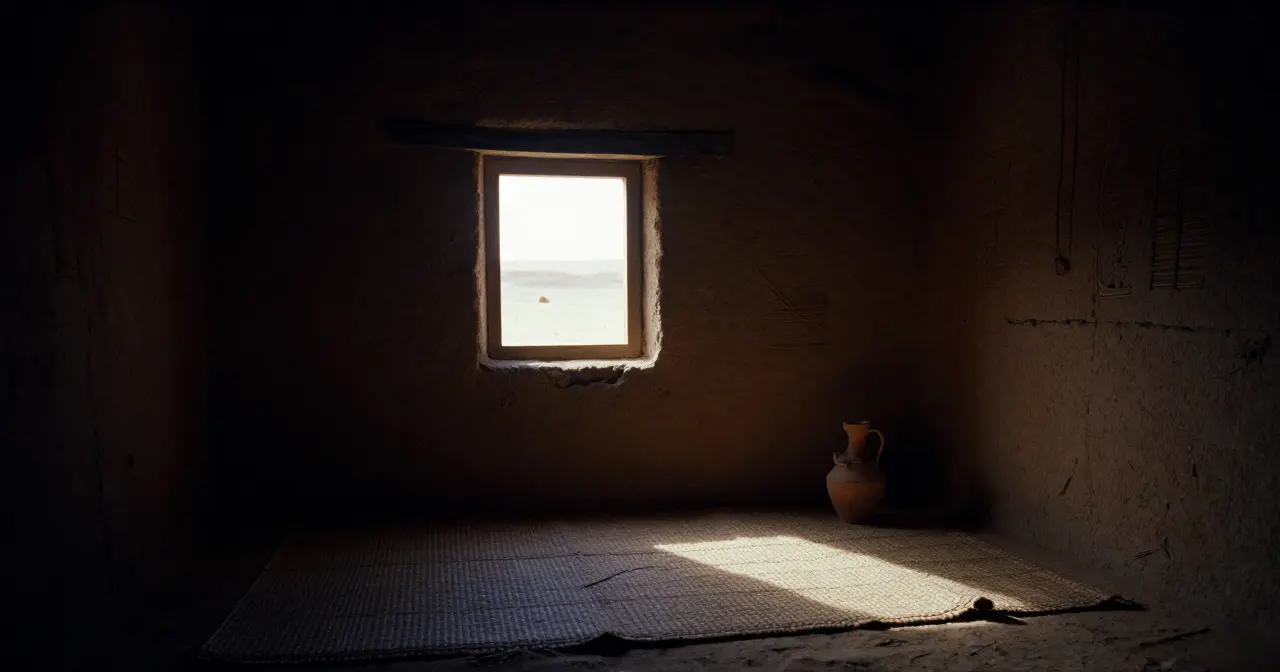
Fourth century, Egyptian desert. A monk comes to an elder and asks how to pray. The answer he gets, in one form or another, is the same thing every time. Watch your thoughts.
What the word meant
The Greek word is prosoche, attention. The French historian Pierre Hadot showed that it was the basic practice of ancient philosophy. For the Stoics, philosophy was not a set of opinions. It was daily exercise, and prosoche was the core of it: staying awake to what is passing through your mind and catching a judgment before it runs you.
Epictetus put it to his students bluntly. Once you let your attention lapse, you will not recover it whenever you like. Marcus Aurelius wrote his Meditations as this kind of exercise.
The desert monks inherited this and changed the aim. Attention now served the heart’s clarity before God. Later Eastern Christian writers made it the subject of an entire library, the Philokalia, where the related word nepsis, watchfulness, runs through hundreds of pages. Their teaching was that a thought starts as a small suggestion. You look at it, you talk with it, you agree to it, and then you are captive to it. By the time you act, the battle was long over.
Proverbs had already said it: keep thy heart with all diligence, for out of it are the issues of life.
Sound familiar?
“Mindset.” “Your focus determines your reality.” “What you think about, you bring about.” “Guard your energy.”
The modern versions are not wrong that attention shapes experience. Cognitive psychology has a great deal to say on this, and much of cognitive behavioral therapy descends directly from the Stoics.
What the modern version drops is the point of it all. The monks did not watch their thoughts so that they could attract better outcomes. They did it to become the kind of person who could receive whatever came, including nothing, without being wrecked. Prosoche ended in freedom from wanting, and the course on it usually ends in wanting more successfully.
The warning inside it
There is a sharper edge too. “What you worship, you become” is the oldest law of attraction, and it reads as a warning. Psalm 115 says of idols and their makers that “they that make them are like unto them.” Your phone’s feed, by the way, has spent billions of dollars learning how to take this practice away from you.
How to try it
Pick one hour tomorrow. Each time you notice a strong thought, name it, and do nothing else. “That’s envy.” “That’s fear about money.” Don’t argue with it and don’t obey it. You will fail within four minutes. So did they. They wrote that down too.
Save this. Then guard the gate.
Common questions
What does prosoche mean?
Prosoche is a Greek word for attention or attentiveness. For the Stoics, it was the central spiritual exercise: constant watchfulness over your thoughts and judgments. Christian monks took it up as vigilance over the heart.